Not long ago, creating something from scratch almost always required human effort.
If you wanted to write an article, you wrote every sentence yourself.
If you needed an illustration, you opened a design application or hired an artist.
Writing software meant spending hours—or even days—typing code line by line.
Today, that process looks very different.
You can describe an idea in a single sentence and receive a draft article, an image, a piece of music, or even working code within seconds.
This shift has introduced millions of people to a new term: Generative AI.
It's one of the fastest-growing areas of artificial intelligence, powering tools like ChatGPT, Claude, Google Gemini, Microsoft Copilot, and many others.
Despite its popularity, Generative AI is often misunderstood.
Some people think it's simply another name for artificial intelligence.
Others believe it's replacing human creativity altogether.
The reality is much more nuanced.
Generative AI is a specialized branch of AI designed to create new content rather than simply analyze existing information.
Understanding how it works—and where its strengths and limitations lie—will help you use it more effectively and avoid many of the misconceptions surrounding modern AI.
What Is Generative AI?
Generative AI is a type of artificial intelligence capable of creating original content based on the instructions it receives.
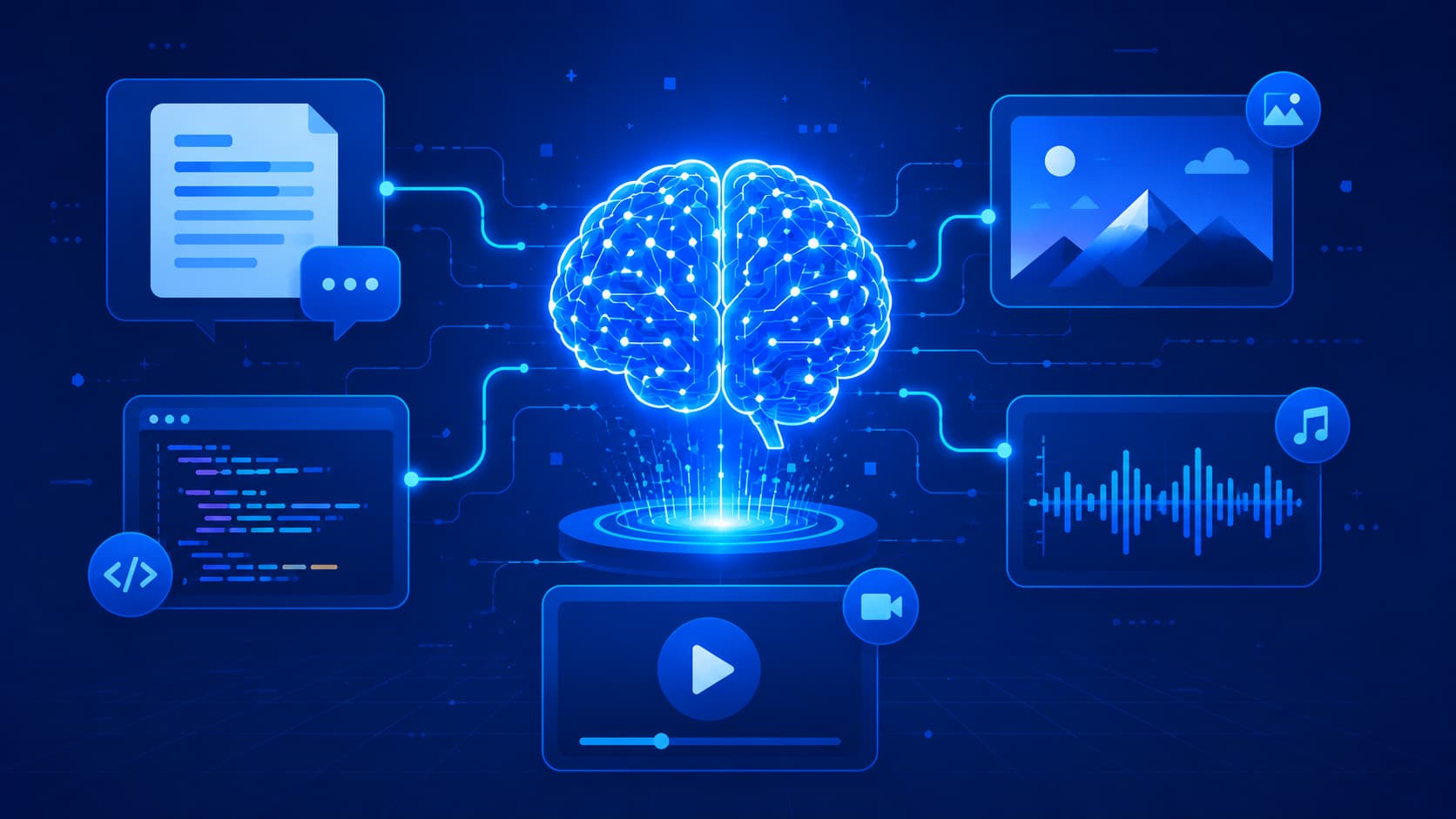
Depending on the model, that content might include:
- Articles
- Emails
- Images
- Videos
- Computer code
- Music
- Presentations
- Audio
- Product descriptions
Unlike traditional AI systems that focus on classification or prediction, Generative AI produces something new.
For example, a spam filter analyzes incoming emails and decides whether they're legitimate or unwanted.
That's an example of traditional AI solving a classification problem.
Now imagine asking an AI assistant to write a thank-you email, generate a marketing slogan, or design a logo concept.
Instead of sorting existing information, it's creating entirely new content.
That's what makes Generative AI different.
It's designed to generate rather than simply recognize.
Why Has Generative AI Become So Popular?
The answer is simple.
It dramatically reduces the time needed to turn ideas into a first draft.
A writer can overcome writer's block.
A designer can explore multiple visual concepts in minutes.
A programmer can generate boilerplate code instead of writing everything from scratch.
A student can receive explanations that are easier to understand.
Businesses can produce marketing materials more efficiently.
The technology doesn't eliminate the need for human creativity.
Instead, it changes where people spend their time.
Rather than starting with a blank page, they start with a draft that can be reviewed, improved, and personalized.
That's one of the biggest reasons Generative AI has become part of so many people's daily workflow.
How Does Generative AI Work?
At first glance, it can almost feel like magic.
You type a question.
A few seconds later, a detailed answer appears.
You describe an image.
Moments later, the image exists.
Behind the scenes, however, the process is based on pattern recognition rather than imagination.
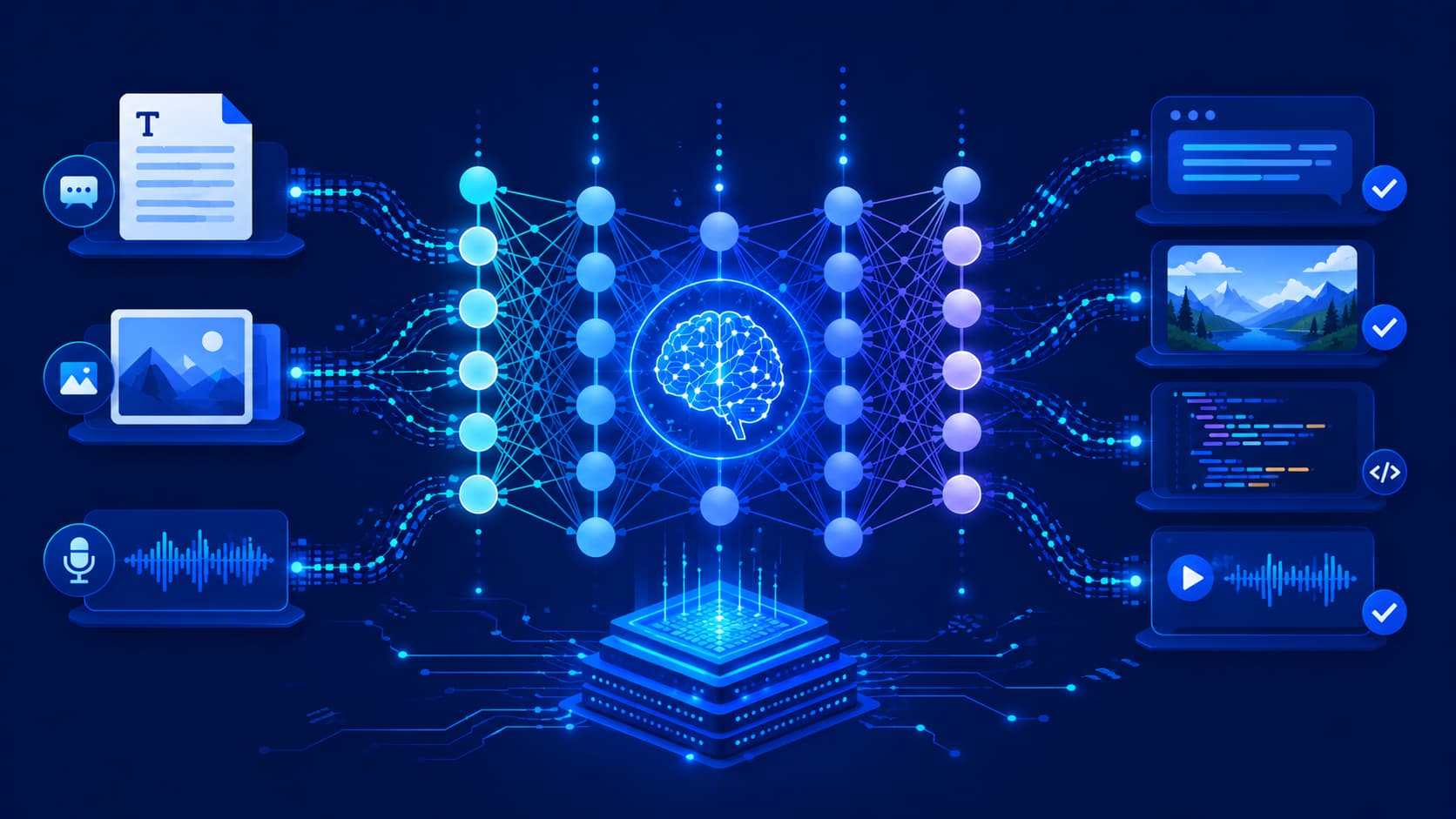
Generative AI is trained using enormous collections of text, images, audio, or other forms of data.
During training, it learns relationships between words, visual elements, sounds, and countless other patterns.
When you enter a prompt, the model predicts what content should come next based on everything it has learned.
It isn't copying information from a single source.
Instead, it's generating new output by combining patterns learned during training.
That's why two people can ask the same AI model similar questions and still receive noticeably different responses.
Is Generative AI Actually Creative?
This is one of the most interesting questions surrounding modern AI.
The answer depends on how you define creativity.
Generative AI can produce writing, artwork, music, and software that appear highly creative.
However, it doesn't create ideas the same way humans do.
People draw from emotions, personal experiences, cultural influences, and imagination.
Generative AI identifies patterns in existing data and uses those patterns to generate something new.
The results can certainly feel creative, but the process behind them is fundamentally different from human creativity.
That's why many professionals see Generative AI as a creative assistant rather than a creative replacement.
Where Is Generative AI Used Today?
One of the reasons Generative AI has gained so much attention is that it isn't limited to a single industry.
People from completely different professions are finding practical ways to use it every day.
Writing and Content Creation
Writers use Generative AI to brainstorm ideas, create outlines, rewrite paragraphs, summarize long documents, and overcome writer's block.
Instead of replacing the writing process, it often helps eliminate the hardest part: getting started.
Many content creators treat AI as a collaborative partner that speeds up the first draft while leaving the final editing and storytelling to humans.
Software Development
Developers use Generative AI to explain unfamiliar code, generate repetitive functions, suggest improvements, and identify potential bugs.
It doesn't remove the need for programming knowledge, but it can make development faster and more efficient.
For experienced developers, it's like having an assistant that's available whenever they need help.
Design and Creative Work
Designers use AI to generate concept art, create mood boards, experiment with layouts, and visualize ideas before moving into detailed editing.
Rather than replacing creativity, it gives creative professionals more starting points to explore.
Education
Students and educators use Generative AI to simplify complex topics, generate study materials, practice foreign languages, and create quizzes.
Used responsibly, it can become a valuable learning companion rather than simply a shortcut for completing assignments.
Business
Companies use Generative AI to draft emails, prepare reports, generate product descriptions, create marketing campaigns, and improve customer support.
Many repetitive writing tasks that once took hours can now be completed in minutes, allowing teams to focus on strategy and decision-making.
Popular Generative AI Tools
Although new AI tools appear almost every week, a few have become particularly well known.
ChatGPT
One of the most widely recognized AI assistants, capable of writing, explaining concepts, brainstorming ideas, summarizing information, and assisting with programming.
Claude
Known for producing thoughtful, well-structured responses and handling long documents effectively.
Many professionals use it for research, writing, and document analysis.
Google Gemini
Google's AI platform integrates with many of its existing products, helping users search, write, analyze information, and complete everyday tasks.
Microsoft Copilot
Built into Microsoft products, Copilot helps users work more efficiently by assisting with documents, spreadsheets, presentations, coding, and business workflows.
These tools may look similar on the surface, but each has its own strengths, capabilities, and areas of focus.
The Benefits of Generative AI
Generative AI offers far more than convenience.
When used thoughtfully, it can significantly improve the way people work and learn.
Faster Idea Generation
Starting with a blank page is often the hardest part of any creative project.
Generative AI helps transform rough ideas into workable drafts within seconds.
Increased Productivity
Repetitive tasks such as writing summaries, organizing information, or creating first drafts can be completed much faster, giving people more time to focus on refining their work.
Easier Access to Information
AI can explain complicated topics in simpler language, making technical subjects more approachable for beginners.
Support for Creativity
Rather than replacing human imagination, Generative AI often expands it.
Many creators use AI to explore different directions before choosing the one that best matches their vision.
The Limitations of Generative AI
Despite its impressive capabilities, Generative AI isn't perfect.
Understanding its limitations is just as important as understanding what it does well.
It Can Produce Incorrect Information
AI sometimes generates answers that sound convincing but contain factual mistakes.
For this reason, important information should always be verified using reliable sources.
It Doesn't Truly Understand Context
Generative AI predicts patterns in language rather than thinking the way humans do.
Although its responses may appear intelligent, it doesn't possess personal experiences, emotions, or genuine understanding.
The Quality Depends on the Prompt
The output you receive often depends on the instructions you provide.
Clear, specific prompts generally produce better results than vague requests.
Learning how to communicate effectively with AI has become an important skill in its own right.
Human Review Is Still Essential
Whether you're writing an article, generating software code, or creating business content, AI-generated work should always be reviewed before it's published or shared.
Human judgment remains the final layer of quality control.
Copyright and Ethical Considerations
As Generative AI becomes more common, conversations about ethics have become increasingly important.
Questions surrounding copyright, transparency, misinformation, and responsible use continue to shape how AI tools evolve.
Using AI responsibly means understanding both its capabilities and its limitations.
It's also important to respect intellectual property, verify factual information, and avoid presenting AI-generated content as unquestionable truth.
The technology itself is neither good nor bad.
Its impact depends on how people choose to use it.
Common Misconceptions
One common misconception is that Generative AI simply copies content from the internet.
Modern AI models don't retrieve complete articles or images from a database every time you ask a question.
Instead, they generate new responses based on patterns learned during training.
Another misconception is that AI will replace every creative profession.
In reality, many professionals are finding that AI works best as a creative assistant rather than a replacement.
It accelerates repetitive work while leaving strategy, originality, and final decision-making in human hands.
Finally, some people believe every AI tool is a Generative AI system.
That's not the case.
Many AI applications focus on prediction, classification, recommendation, or automation rather than generating new content.
Frequently Asked Questions
What is Generative AI in simple terms?
Generative AI is a type of artificial intelligence that creates new content such as text, images, music, videos, or software code based on the instructions it receives.
Is ChatGPT a Generative AI tool?
Yes.
ChatGPT is one of the best-known examples of Generative AI because it generates human-like text in response to user prompts.
Can Generative AI replace human creativity?
Not entirely.
AI can generate ideas and drafts, but human creativity, experience, critical thinking, and personal perspective remain essential.
Why does Generative AI sometimes make mistakes?
Generative AI predicts likely responses based on patterns in data rather than verifying every fact in real time.
That's why important information should always be reviewed and fact-checked.
Is Generative AI only useful for writers?
Not at all.
People in software development, education, healthcare, marketing, design, customer support, and many other industries use Generative AI to improve productivity and streamline their work.
Conclusion
Generative AI has changed the way people create, learn, and solve problems.
What once required hours of work can now begin with a simple conversation or a well-written prompt.
That doesn't mean creativity has become less valuable.
If anything, it has made human judgment more important than ever.
AI can generate ideas, but people decide which ideas are worth pursuing.
As the technology continues to evolve, learning how to work alongside Generative AI will become an increasingly valuable skill.
The goal isn't to compete with AI.
It's to understand where it adds value, where it falls short, and how it can help you turn ideas into reality more efficiently.