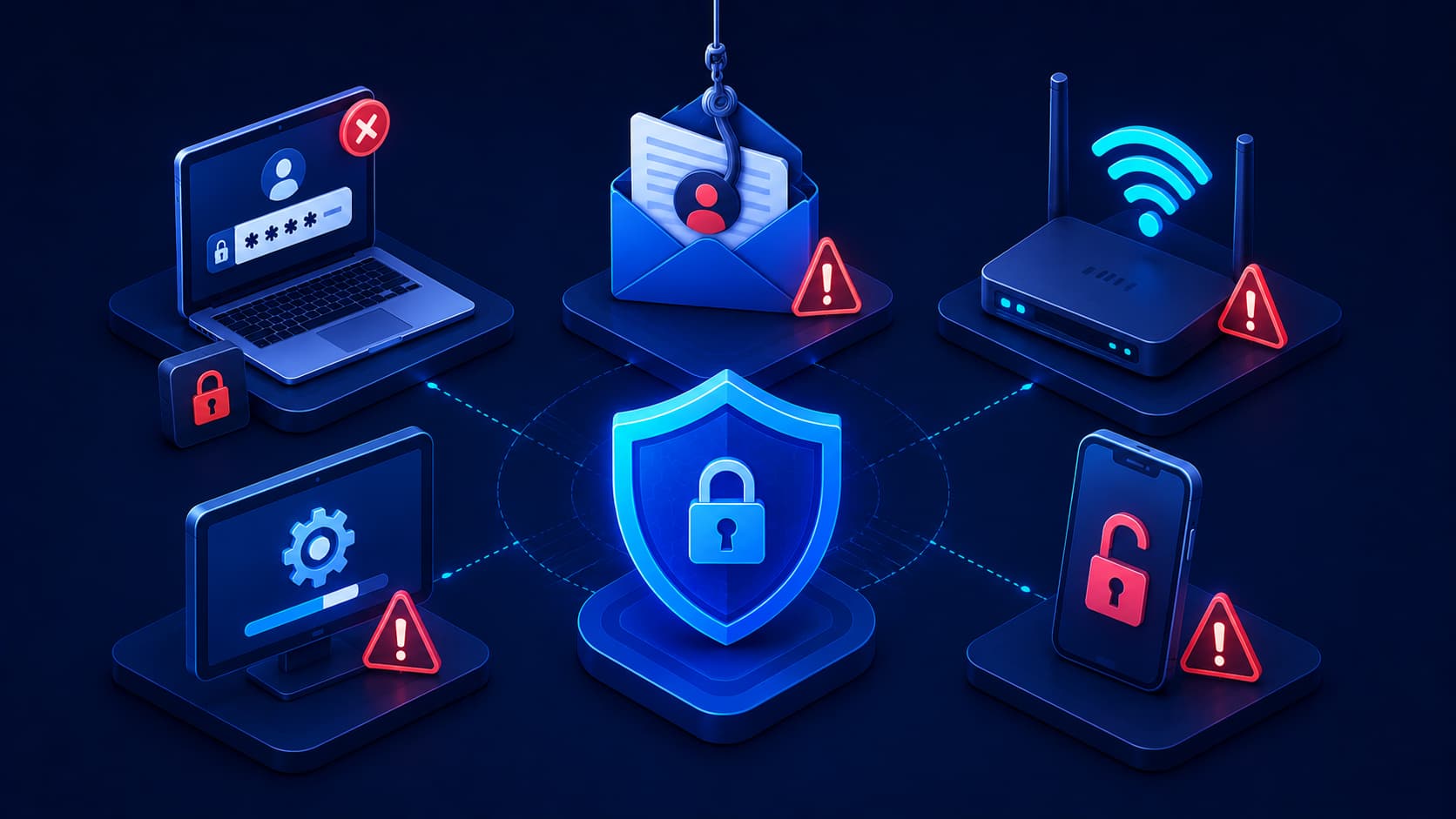
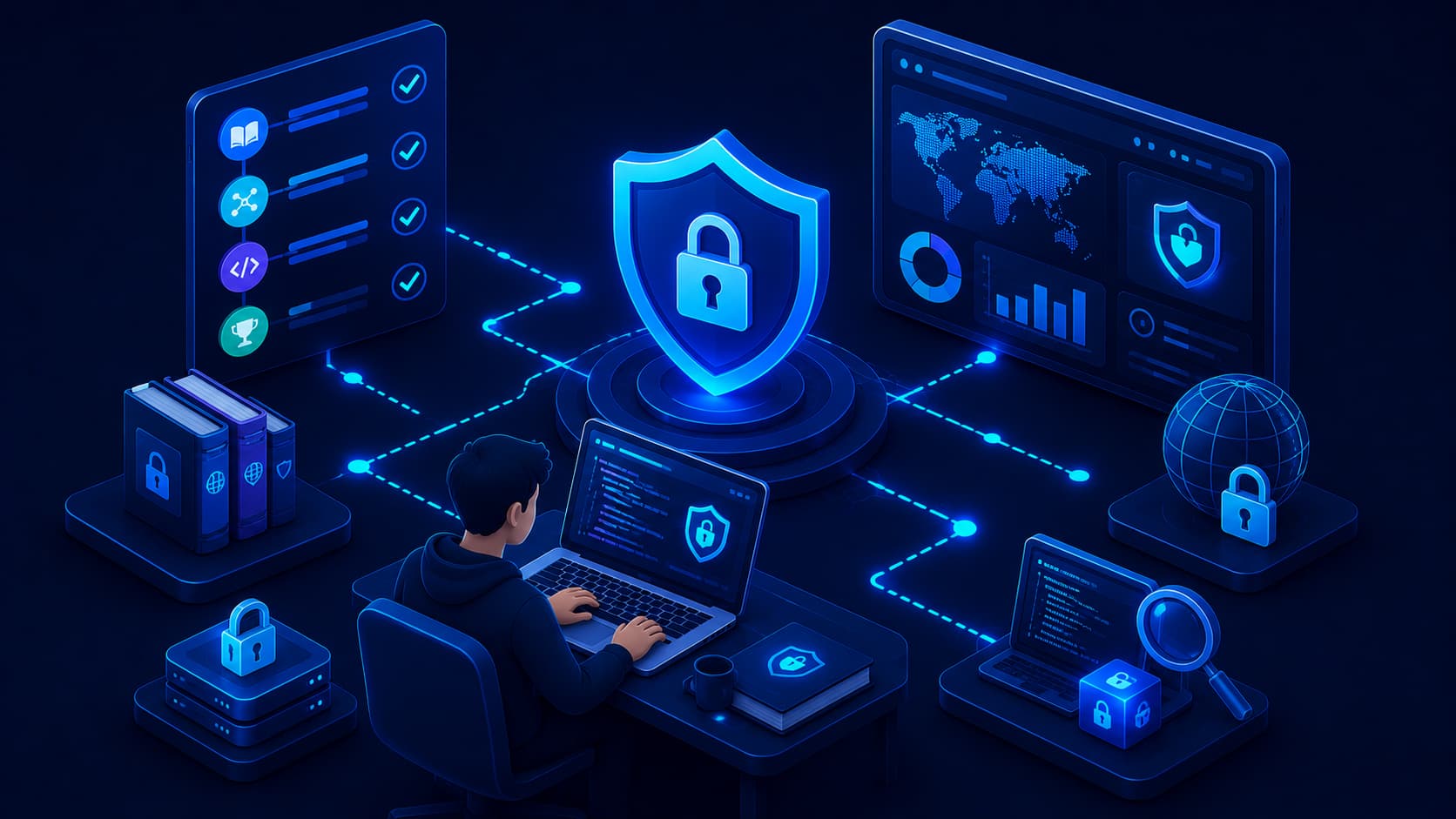
Cybersecurity has become one of the most important disciplines in modern technology.
As more businesses move online and digital services become part of everyday life, protecting systems, applications, and sensitive information is no longer optional.
Organizations of every size now invest heavily in cybersecurity, creating growing demand for professionals who can identify risks, defend networks, and respond to security incidents.
That demand has encouraged many people to explore cybersecurity as a potential career.
The challenge is knowing where to begin.
A quick search online reveals thousands of courses, certifications, tutorials, and career guides.
For someone just starting out, the sheer amount of information can feel overwhelming.
The good news is that you don't need to learn everything at once.
Cybersecurity is a broad field, but it becomes much easier to understand when you build your knowledge step by step.
Rather than jumping directly into penetration testing or advanced hacking techniques, it's far more effective to establish a solid foundation first.
Step 1: Understand the Fundamentals
Before exploring specialized security topics, take time to understand the basics.
You should be comfortable explaining:
- What cybersecurity is.
- Common cyber threats.
- Malware, phishing, and ransomware.
- Password security and multi-factor authentication.
- Encryption.
- Basic cybersecurity best practices.
These concepts provide the foundation for almost every area of cybersecurity.
Without them, more advanced topics can become confusing because they assume you already understand the core principles.
Step 2: Learn How Computer Networks Work
Cybersecurity and networking are closely connected.
To protect a network, you first need to understand how it operates.
Focus on learning topics such as:
- IP addresses
- DNS
- HTTP and HTTPS
- TCP and UDP
- Routers and switches
- Firewalls
- VPNs
You don't need to become a network engineer, but understanding these concepts will make many cybersecurity topics much easier to follow.
Step 3: Become Comfortable With Operating Systems
Security professionals work with different operating systems every day.
Spend time learning both Windows and Linux.
Understand how files are organized, how permissions work, how users are managed, and how to use basic command-line tools.
Linux is especially valuable because many servers, cloud platforms, and security tools run on Linux-based systems.
Developing confidence with both environments will help you throughout your cybersecurity journey.
Step 4: Learn How Attackers Think
One of the best ways to improve your defensive skills is to understand common attack techniques.
This doesn't mean learning how to commit cybercrime.
It means understanding how attackers exploit vulnerabilities, steal credentials, deliver phishing campaigns, and move through compromised systems.
Studying attack methods helps you recognize weaknesses before someone else does.
It also makes defensive strategies much easier to understand.
Step 5: Build Hands-On Experience
Reading about cybersecurity is important, but practical experience is where real learning begins.
Fortunately, you don't need to work in a large company to gain that experience.
You can create a small home lab, use virtual machines, or take advantage of legal cybersecurity training platforms designed specifically for beginners.
Simple projects—such as configuring a firewall, analyzing system logs, identifying phishing emails, or securing a Linux server—help turn theory into practical skills.
Hands-on practice also builds confidence, making technical concepts easier to understand and remember.
Step 6: Learn Basic Scripting
You don't need to become a professional software developer to work in cybersecurity, but basic scripting skills can make many tasks easier.
Simple scripts can automate repetitive work, analyze logs, organize data, or perform routine security checks.
Python is widely used because it's beginner-friendly and supported by a large cybersecurity community.
Basic knowledge of Bash or PowerShell is also valuable for automating administrative tasks on Linux and Windows systems.
Rather than trying to master programming immediately, focus on learning enough to solve practical problems.
Step 7: Explore Different Cybersecurity Specializations
Cybersecurity is not a single career.
It's a collection of many specialized fields.
As your knowledge grows, you'll naturally discover areas that match your interests.
Some of the most common specializations include:
- Security Operations Center (SOC)
- Network Security
- Cloud Security
- Application Security
- Incident Response
- Digital Forensics
- Governance, Risk, and Compliance (GRC)
- Security Engineering
- Penetration Testing
- Threat Intelligence
You don't need to choose a specialization immediately.
Understanding the broader landscape first will help you make a more informed decision later.
Step 8: Consider Certifications When You're Ready
Cybersecurity certifications can demonstrate your knowledge and help strengthen your résumé, but they shouldn't be your starting point.
Many beginners make the mistake of studying only to pass an exam.
A stronger approach is to first understand the concepts and gain practical experience.
Once you've built a solid foundation, certifications become much more valuable because you'll understand not only the correct answers but also the reasoning behind them.
Employers often appreciate candidates who can combine theoretical knowledge with real-world problem-solving skills.
Common Mistakes Beginners Should Avoid
Learning cybersecurity is a long-term journey.
Avoiding a few common mistakes can make that journey much smoother.
Focusing Only on Offensive Security
Ethical hacking often receives the most attention on social media, but cybersecurity includes many other important roles.
Defensive security, monitoring, risk management, cloud security, and incident response are equally valuable career paths.
Building a broad foundation before specializing will create more opportunities in the future.
Ignoring the Fundamentals
It's tempting to jump directly into advanced hacking tools.
However, without understanding networking, operating systems, authentication, and security principles, those tools become much harder to use effectively.
Strong fundamentals make advanced topics much easier to learn.
Learning Without Practicing
Watching tutorials is helpful, but real progress comes from applying what you've learned.
Build small projects, solve practical challenges, and experiment in safe learning environments.
Experience is one of the best teachers in cybersecurity.
Expecting Instant Results
Cybersecurity is a constantly evolving field.
Even experienced professionals continue learning throughout their careers.
Rather than trying to learn everything quickly, focus on steady improvement over time.
Consistency matters far more than speed.
Frequently Asked Questions
How long does it take to learn cybersecurity?
You can understand the fundamentals within a few weeks of consistent study.
Developing practical skills and professional experience usually takes several months or longer, depending on your learning pace and the amount of hands-on practice you complete.
Do I need programming skills?
Not at the beginning.
Basic scripting becomes increasingly useful as you progress, but many cybersecurity concepts can be learned before writing code.
Is cybersecurity a good career choice?
Yes.
Cybersecurity continues to experience strong global demand as organizations invest in protecting their digital infrastructure and responding to evolving cyber threats.
Can I learn cybersecurity without a computer science degree?
Absolutely.
Many cybersecurity professionals come from diverse educational and professional backgrounds.
Practical skills, continuous learning, and hands-on experience are often just as valuable as formal academic qualifications.
What's the best way to improve quickly?
Study the fundamentals, practice regularly, build small projects, stay curious, and make learning a consistent habit.
Steady progress over time is far more effective than trying to learn everything at once.
Conclusion
Cybersecurity may seem like a complex field at first, but every expert began by learning the same fundamentals.
Understanding how computers, networks, operating systems, and common cyber threats work provides the foundation for everything that comes next.
From there, practical experience, continuous learning, and curiosity become your greatest strengths.
Whether your goal is to protect your own digital life, support your organization, or build a professional career in cybersecurity, the journey begins with a single step.
By learning consistently, practicing what you study, and building your skills over time, you'll be well prepared to navigate one of the fastest-growing and most rewarding fields in modern technology.